1. Sideline Etiquette
Being a positive presence on the sideline is one of the most important things a parent can do to support their child's development. Research consistently shows that players perform better and enjoy the game more when the sideline is calm and encouraging.
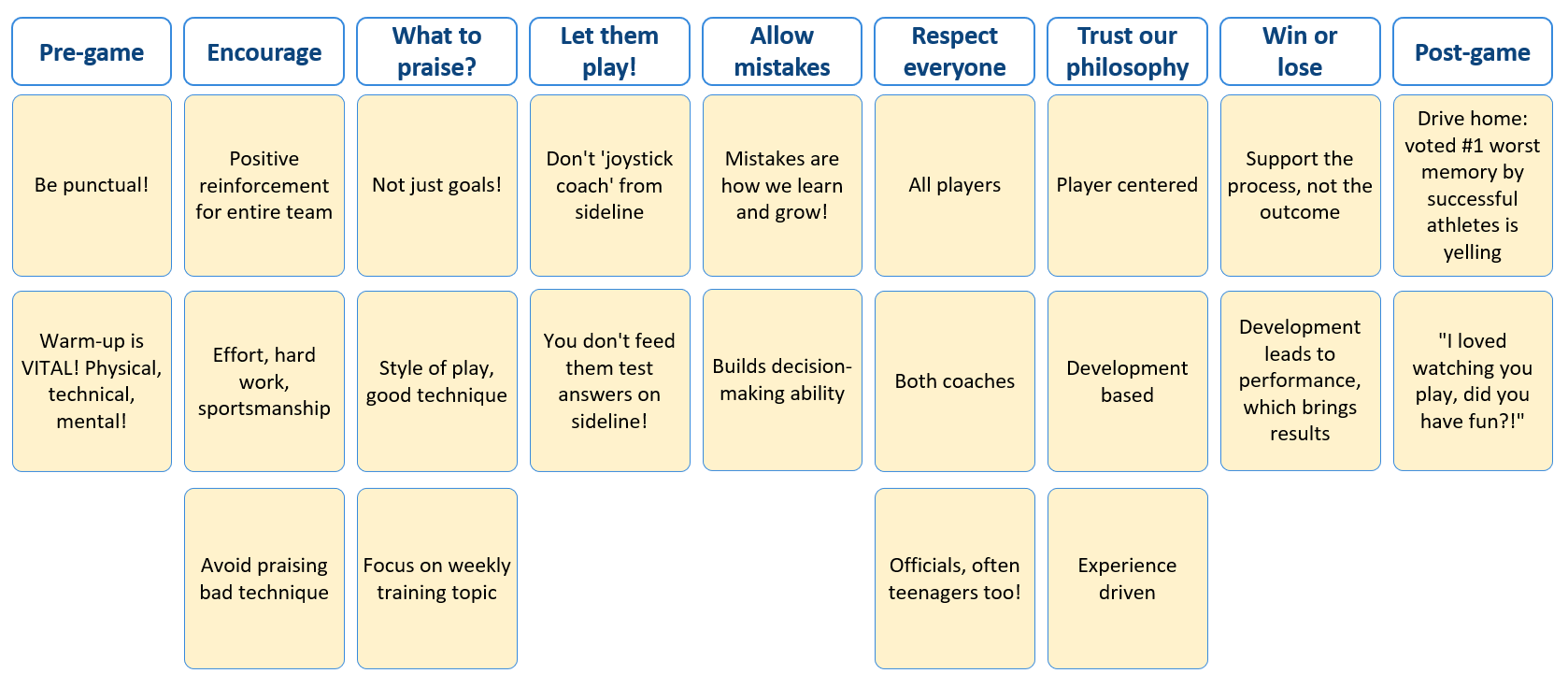
Source: Hopkinton Youth Soccer, Revs Academy
2. Get Touches Outside of Practice
One of the biggest differentiators in a young player's development is the number of touches they get on the ball outside of scheduled practice. The more comfortable a player is with the ball at their feet, the more their confidence and creativity on the field will grow. Individual training at home doesn't need to be elaborate — consistency is what matters.
- Get on the wall — passing against a wall is one of the most effective ways to build a reliable first touch; it simulates a return pass at varying angles and speeds
- Work on both feet — alternate striking and receiving with your weaker foot to develop balance and versatility
- Practice ball mastery moves — cuts, roll-overs, scissors, and turns can all be practiced in small spaces
- Set small daily goals — even 5–15 minutes of focused individual work per day adds up to hundreds of extra touches per week
- Make it fun — challenge yourself with games like "how many wall passes in 60 seconds" to stay motivated
3. Watch Professional Soccer
One of the most underrated forms of player development is simply watching the game at the highest level. Exposure to professional soccer trains the eye to recognize patterns of play, movement off the ball, and technical decisions that are hard to teach verbally. Encourage your child to watch with intention — not just as a fan, but as a student of the game. Examples:
- Premier League (England) — widely considered the most competitive domestic league in the world; great for seeing high-intensity pressing, physical duels, and technical excellence
- UEFA Champions League (Europe) — the pinnacle of club soccer, featuring the best players and tactical systems from across the globe
- MLS (USA) — accessible, local, and increasingly competitive; attending or watching MLS games connects players to the professional game in their own country
- Women's Super League/WSL (England) — one of the top women's leagues in the world, showcasing elite technical and tactical play
- NWSL (USA) — the premier women's professional league in America
4. Pre-Game Nutrition
What a player eats and drinks in the hours before a match has a direct impact on their energy, focus, and physical performance. Good pre-game nutrition doesn't need to be complicated, but it does need to be intentional. Help your child build consistent habits so that fueling for game day becomes second nature.
- Eat 2–3 hours before kickoff — this gives the body time to digest and convert food into usable energy
- Focus on complex carbohydrates — foods like whole grain pasta, rice, oatmeal, or bread provide sustained energy throughout the match
- Include lean protein — chicken, eggs, or Greek yogurt help with muscle readiness without sitting heavy in the stomach
- Avoid heavy, greasy, or high-fat foods on game day — these slow digestion and can cause sluggishness or discomfort
- Hydrate early and often — start drinking water the day before the game, not just the morning of; dehydration significantly impacts performance
- Limit sugar and processed snacks right before the game — they cause energy spikes followed by crashes
- Have a light snack 30–60 minutes before if needed — a banana, rice cake, or small handful of pretzels can top off energy levels without overloading the stomach
- Post-game recovery matters too — within 30–60 minutes after the match, help your child refuel with a combination of protein and carbs to support muscle recovery
5. Taking the Long-Term View
Youth soccer development is a marathon, not a sprint. It can be tempting to measure success by wins, playing time, or early recognition — but the players who thrive in the long run are those who develop a love for the game, resilience through setbacks, and a growth mindset. As a parent, your most powerful role is to be a steady, patient source of support.